Spring brings rain to Williamson County, and rain is where tire condition really matters. The difference between tires with good tread and tires with worn tread shows up most dramatically on wet roads — in stopping distance, in handling, and in the risk of hydroplaning. Spring is the time to know which category your tires fall into.
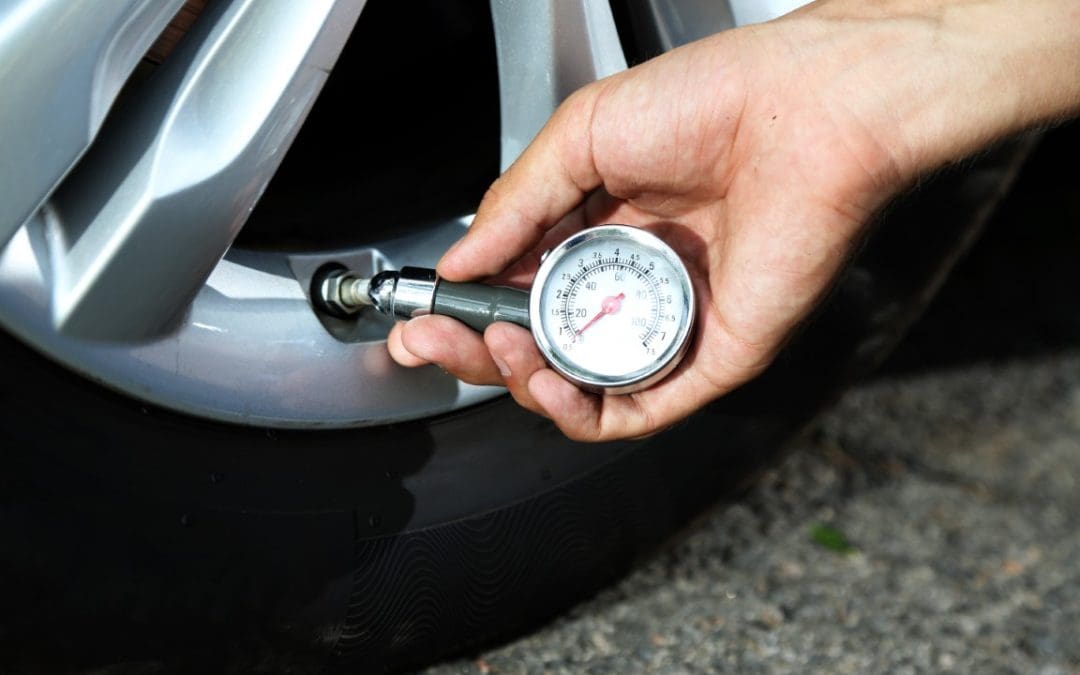
Check your tire pressure first. Pressure fluctuates with temperature — roughly 1 PSI for every 10-degree change. With the swings Franklin sees from January through March, your tires may be noticeably underinflated without ever triggering a warning light. Underinflated tires wear faster, reduce fuel economy, and handle worse. Check the recommended PSI on the sticker inside your driver’s door and top off as needed.
Check your tread depth. The quarter test is quick: insert a quarter into the tread with Washington’s head down. If you can see the top of his head, you’re below 4/32″ — time to think about new tires. For wet spring roads, 6/32″ or more gives you the water-channeling capability you want.
Look at the wear pattern. Is the tread wearing evenly across the width of the tire? Wear on the inside or outside edge points to an alignment issue. Center wear suggests chronic overinflation. Either way, it’s worth addressing before it destroys a new set of tires.
Check your spare. Most drivers never think about the spare until they need it. Make sure it has pressure and is in usable condition.
Stop by Quick Auto and Exhaust in Franklin and we’ll check your tires quickly and thoroughly. Better to know now than find out the hard way.